

- This event has passed.
Hugh Gayler – “London: The Post-Imperial City, 1945-2025”
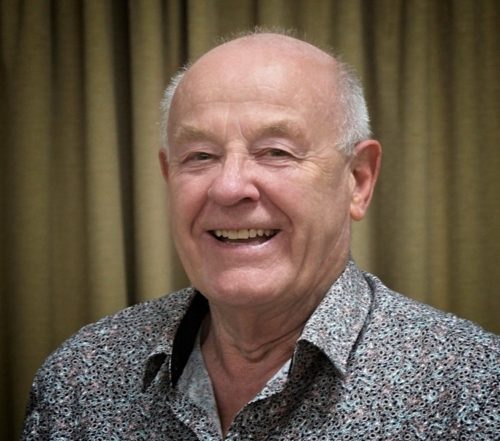
Speaker: Hugh Gayler – Probus Member
Topic: “London: The Post-Imperial City, 1945-2025”
Speaker offers in-depth look at post-war London
John Senn introduced club member Hugh Gayler as our speaker for November whose topic was London: The post imperial city. Hugh retired from Brock University in the field of urban planning in 2010. He travelled to London many times with student groups, studied economics in London and on returning to Canada completed his PhD at the University of British Columbia.
Hugh began his presentation by remembering London’s war dead with a Power Point tour of various memorials and cenotaphs erected to pay tribute to veterans and civilians who lost their lives during combat in the two world wars. Evidence of bombing destruction still remains in parts of the city.
Hugh went on to talk about the decline of London after World War II. He said dock closures and industrial losses contributed to a drastic drop in population in the city of London. He explained that London is a capitol city with 32 boroughs. Government is composed of the Greater London Authority and 33 smaller authorities. London’s population is now 9.1 million while the total metropolitan population has risen to 15.1 million, making it the third largest city in Europe.
He said that the City of London still has its own police force while the other boroughs are served by the Metropolitan Police.
Hugh said that for years the city followed an anti-high-rise policy with decentralization of offices. This started to change when Canadian interests developed Canary Wharf in the financial district. Hilton built the first high-rise hotel overlooking Buckingham Palace in the 1970s and there followed a splurge of unique buildings which Hugh displayed in his photographic tour. The buildings included some given names such as the Gerken, the Cheese Grater, the Walkie Talkie and even the London Eye.
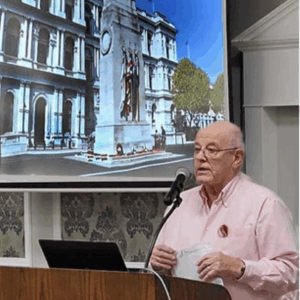
He indicated that London remains a cultural capitol with art galleries, museums, opera houses, symphonies and city markets. He said that every book published in England is housed in the London Library. He added that Fleet Street is no longer the centre for newspapers as they have all moved out of the area
Hugh said that tourism is now a major financial contributor as the city has become a major cruise ship destination.
Duncan McLaren thanked Hugh for sharing his in-depth knowledge of London through words and pictures.